The Authentic Recipe Myth: Why Dishes Keep Changing
The authentic recipe myth can make a changing dish feel like a mistake. Learn how ingredients, household habits, and taste shape a recipe’s identity.
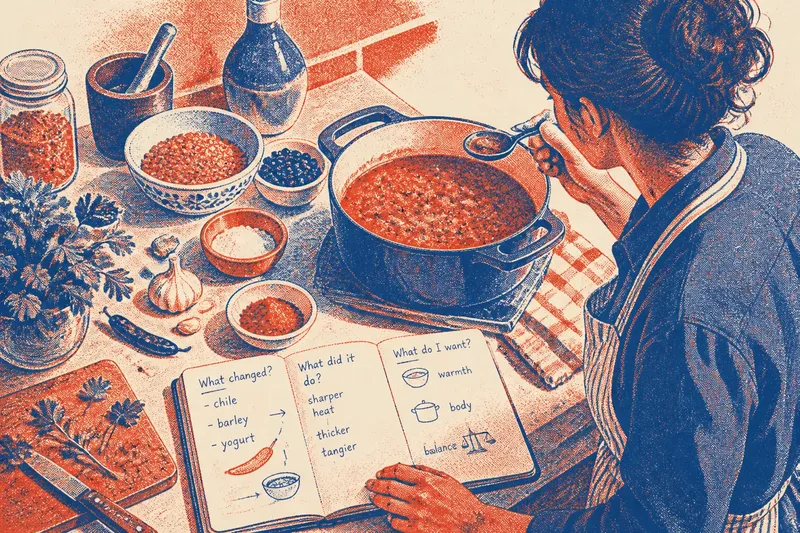
The authentic recipe myth turns an ordinary cooking snag into a question of legitimacy: your sauce is thicker than the one you remember, so you wonder if you have made the dish wrong. Recipes change as ingredients travel, kitchens adapt, and cooks adjust for the people at their table. A useful way through the confusion is to identify what changed, what that change did, and what you actually want from the dish.
Start by separating a recipe’s identity from its exact ingredient list
A recipe is more than a roll call of ingredients. Its identity may rest on a cooking method, a particular seasoning, a texture, or the way it is served. Those features can remain recognizable even when a cook swaps an ingredient that is hard to find or not suited to the household.
That does not mean every version is interchangeable. A replacement can alter flavor, structure, or the balance between rich and sharp. But a difference is not automatically a failure. Before revising a dish, decide what you want to preserve: the toasted aroma of a spice, the softness of a dumpling, the tang of a sauce, or the pleasure of sharing it in a familiar way.
It also helps to treat “authentic” as a question about context rather than a stamp of approval. A family’s weekday version may reflect its own habits; a restaurant’s version may suit its equipment and customers. Neither needs to stand in for every cook connected to the dish.
When a substitute changes the flavor more than expected
What usually causes it: Ingredients with similar names or appearances can behave differently. A mild chile and a sharp one may bring different heat and aroma; fresh herbs and dried herbs do not release flavor in the same way. A substitute can also be perfectly usable yet dominate a dish when added in the same amount as the original.
What to try: Identify the ingredient’s job before choosing a replacement. Is it adding heat, fragrance, acidity, sweetness, body, or color? Then pick a substitute for that job and add it gradually, tasting as the dish develops. When the missing ingredient is central rather than supporting, it may be better to choose a nearby version of the dish instead of pretending the swap is invisible.
Imagine you are making a lentil stew whose usual dried chile is unavailable. You choose a sharper pepper, use a small amount at first, and taste before adding more; the result should let you judge whether the stew’s warmth still feels balanced. If it overwhelms the lentils, stop there and adjust the serving with a cooling accompaniment rather than adding more heat to chase a remembered flavor.
When the texture seems wrong despite careful cooking
What usually causes it: Flour, rice, beans, dairy, and produce vary in moisture and composition. A flour may absorb more liquid than the one a recipe assumes. A batch of beans may soften readily or stay firm longer, and a thick yogurt may behave differently from a pourable one. The recipe’s author may also have used a different pan or cooking setup.
What to try: Look at the food, not just the clock. Add liquid in small amounts if a dough or stew seems too dry; let excess moisture cook away if a sauce is loose. For beans or grains, check tenderness before moving to the next stage. These adjustments are not a new recipe so much as a response to what is in the pot.
When a result keeps missing the mark, note the ingredient type and the visible change you made. “Added a splash of water when the dough cracked” is more useful than “needed fixing.” Those small observations help you repeat a version that suits your ingredients without claiming it is the only correct one.
When a family version and a written recipe disagree
What usually causes it: Household recipes often travel by demonstration and memory. “Cook until it smells ready” can carry a cook’s practiced judgment, while a written recipe may give a fixed sequence. Over time, people may also change the dish to match a new kitchen, a different household, or the tastes of whoever eats it.
What to try: Ask what the remembered instruction is trying to achieve. “Brown it well” may mean developing a deep aroma before adding liquid; “keep stirring” may prevent sticking or encourage a smooth texture. Preserve that purpose when you adapt the method, and record the version your household actually likes. A note about texture or aroma can carry more meaning than insisting on an exact quantity that no one remembers.
For a dish shared across generations or communities, there may be several sincere accounts of what belongs in it. Listen for the setting behind each one: a festive preparation, a quick family meal, a regional ingredient, or a cook’s personal preference. Disagreement can reveal how the dish has lived, rather than identify a single person who has the authority to settle it.
When a familiar dish tastes too rich, sharp, or mild
What usually causes it: Taste is shaped by more than the recipe. The ingredients available, the meal around the dish, and the people eating it all matter. A cook may reduce heat for a child, use less salt because another component is already seasoned, or add acidity because the finished dish feels heavy.
What to try: Adjust one quality at a time. A little acid can brighten a rich dish; a cooling side can soften perceived heat; a longer simmer can round out some flavors. Make changes in modest increments and taste again. Avoid adding several fixes at once, which can make it hard to tell what helped.
There is no need to force a familiar dish to match a memory that came from different ingredients or circumstances. It is also not worth the effort to seek out an exact replacement for every minor ingredient if the ingredient contributes little to the dish’s character. Save that search for the flavor or texture you most want to preserve.
How can you tell whether a change still suits the dish?
Does a substitution automatically make a recipe inauthentic?
No. A substitution may reflect local availability, dietary needs, or a cook’s established habit. Consider what the ingredient contributes and whether the changed dish still delivers the qualities you care about.
Should you follow a recipe exactly the first time?
Following it closely can help you understand its intended balance, especially if the dish is new to you. Still, ingredient variation can call for small adjustments, so use sensory cues alongside the written directions.
What if two relatives remember different versions?
Record both versions and the details each person associates with them. Differences may reflect separate routines or preferences, not a mistake that needs to be corrected.
How can you adapt a dish without losing what makes it recognizable?
Choose the feature you most want to retain, such as a particular aroma, texture, or serving style. Make other changes with that feature in mind, then describe the result as your household’s version rather than a universal standard.
Keep a useful record of the version you want to make again
A short cooking note can capture the choices a bare ingredient list misses. Write down the ingredient form, the cue that told you it was ready, and any adjustment that improved the balance. For instance, “used canned tomatoes; simmered until the sauce clung to the spoon” gives you a practical reference without pretending that every tomato behaves alike.
When a dish crosses borders or generations, its changes are part of its story. The authentic recipe myth makes cooks choose between rigid imitation and careless alteration, but there is a more attentive option: understand what each ingredient and technique contributes, then make deliberate choices for the kitchen you have. That is how a recipe can remain recognizable while becoming genuinely yours.